Bringing Global Rabbit Care Standards to Japan

Based on 30 years of rabbit-keeping experience in Japan and the US, we deliver rabbit care information in Japanese to protect the health and happiness of rabbits.
BunnyCareJP
House Rabbit Society (HRS)
International Partnership
BunnyCare JP is listed on the House Rabbit Society (HRS) official website as an International Partner.

Problems with keeping rabbits in schools | Why are elementary school rabbits to be pitied?
Release date: August 7, 2026
What are school-kept rabbits? Reasons and current situation regarding keeping rabbits at schools.
School rabbits are rabbits kept at elementary and junior high schools. Along with chickens and guinea pigs, they have long been a part of "school animal care" programs, introduced with the aim of teaching children about the importance of life, compassion, and responsibility.
However, the environment surrounding schools has changed dramatically from what it used to be. Teachers' workloads have increased, managing holidays and long breaks has become a challenge, and in recent years, the effects of extreme heat have also become serious. As a result, more and more people are questioning whether keeping animals at school is truly beneficial for the animals themselves.
Here, we will look at the reasons why school rabbits were incorporated into education and the challenges currently faced by school rabbit care programs.
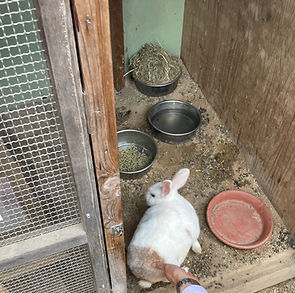


Are school rabbits to be pitied? Problems arising from keeping rabbits in schools.
School rabbit programs have long been a valuable educational activity for teaching students about the importance of life and compassion. However, in recent years, there has been a growing demand to reconsider the way schools keep rabbits from an animal welfare perspective. Here, we introduce some of the main problems that many schools face in common.
Health management and medical neglect of school rabbits | Health checkups, illnesses, and the problem of unspayed/unneutered rabbits
One of the significant problems with keeping school rabbits is the health management of these rabbits. They may not receive regular health checkups, leading to illnesses and poor health being left untreated.
Rabbits have a tendency to hide their illnesses, so if even small changes in their appetite or excretion volume are overlooked, the disease may progress. However, in schools, the children and teachers who care for the rabbits change from day to day, so sometimes no one notices anything unusual.
Furthermore, the veterinarian in charge may primarily treat dogs and cats and may not be knowledgeable about rabbits. To detect rabbit-specific diseases early, regular health checkups by a veterinarian with specialized knowledge are necessary.
Spaying and neutering are also important. Not only do they prevent unwanted breeding, but they also help prevent uterine cancer in females and testicular cancer in males. However, some schools do not perform these surgeries due to budget constraints. If schools cannot provide the necessary health checkups, treatments, and spaying/neutering, then the school's approach to keeping animals as pets needs to be re-evaluated.
Management during holidays, long vacations, and disasters
Rabbits need food, water, and health care every day, even on weekends, holidays, summer vacations, and winter breaks. However, when schools are closed, teachers and students are not attending, so finding someone to continue caring for them becomes a major challenge.
Some schools rely on a rotating system or community volunteers for support, but during periods when schools are closed for about a week to ten days, such as during the Obon festival or the New Year holidays, adequate management can be difficult.
Furthermore, in the event of disasters such as earthquakes, typhoons, or heavy rains, there is the issue of who will evacuate and care for the animals left behind at the school. If school animal care is to continue, it is essential to establish a system for caring for the animals not only during normal times but also during holidays and disasters.


Should school animal care be reconsidered? Education for the future of life.
The purpose of keeping animals in schools has traditionally been to cultivate respect for life and compassion. However, the educational environment and societal values have changed significantly.
The burden on teachers and staff is increasing year by year, and the extreme heat caused by global warming has also become a serious problem. Rabbits are generally considered comfortable at temperatures between 16 and 24°C, but in Japan, days with temperatures exceeding 38°C are no longer uncommon, making it more difficult than before to maintain a safe environment in their outdoor enclosures.
Furthermore, with growing concern for animal welfare, there is a growing movement to reconsider the very practice of "keeping animals in schools for educational purposes." The important thing is not to continue keeping animals in schools, but rather to consider better learning methods that benefit both the animals and the children.


Rethinking school animal care and new life education: What is the situation regarding school animal care overseas?
Unlike in Japan, it is not common for schools to keep animals such as rabbits year-round overseas. In recent years, there has been growing concern for animal welfare, and there is a growing movement to shift from "keeping animals at school" to educational methods that do not burden animals.
For example, some schools conduct classes where students visit animal shelters or rescued rabbit shelters and learn about animal welfare and the importance of life from expert staff. In addition, experiential learning in collaboration with zoos and nature conservation facilities, as well as education that utilizes videos, digital exhibits, and online materials to teach about animal behavior and ecology, are also becoming widespread.
These initiatives provide children with an opportunity to learn about the preciousness of life and what is necessary for humans and animals to live together happily, without causing excessive stress or burden to the animals.
In Japan, too, the need to reconsider school animal husbandry practices has been pointed out against the backdrop of increasing workloads for teachers and staff, extreme heat due to global warming, and growing awareness of animal welfare. However, education about life is not something that can only be achieved by keeping animals in schools.
For example, instead of keeping rabbits at school, one option is to establish an "Animal Welfare Education Day." In this system, rescued rabbits or rabbits accustomed to educational activities could visit the school for a short time, learn about proper handling and animal welfare from experts, and then return to their respective living environments. This would allow children to learn while actually interacting with animals, and would also significantly reduce the burden on the rabbits.
Furthermore, calls to abolish the practice of keeping rabbits in schools are spreading nationwide. For rabbits already being kept in schools, it is important not to simply look for new homes for them, but rather to transfer them to foster families or rescue organizations that can provide appropriate care for them for their entire lives.
If you want to reconsider school animal care practices, you can also convey your opinions and requests to your local school or board of education. Even though each individual voice may be small, it can serve as a catalyst for thinking about an educational environment that takes animal welfare into consideration, and it can become a force that changes the future of life education for the better.
A former school rabbit that graduated from school and was adopted by a foster family to live with them.


