Bringing Global Rabbit Care Standards to Japan

Based on 30 years of rabbit-keeping experience in Japan and the US, we deliver rabbit care information in Japanese to protect the health and happiness of rabbits.
BunnyCareJP
House Rabbit Society (HRS)
International Partnership
BunnyCare JP is listed on the House Rabbit Society (HRS) official website as an International Partner.

The Complete Guide to Litter Training Your Rabbit | Tips and Methods to Avoid Mistakes
Publication date: April 15, 2026 Last updated: August 11, 2026
The key to toilet training rabbits is using hay!
How to set up a litter box for rabbits while they eat hay

If you've arrived at this page by searching for "rabbit toilet training," you're probably struggling with your rabbit's accidents. In fact, there's a significant difference between the methods commonly presented in Japan and those recommended by the American rabbit rescue organization, the House Rabbit Society. This article will explain the entire HRS toilet training method.
Rabbit toilet training guide
Toilet types and installation methods differ between Europe/America and Japan.
The triangular litter boxes that are common in Japan are rarely seen in pet supply stores in Europe and America. Instead, cat litter boxes are used as both a litter box and a hay feeder. Using the same litter box and hay feeder suits the rabbit's natural instincts, as it encourages them to eat hay more readily and helps them learn to use the litter box in a relaxed state.
How to teach your rabbit how to use the toilet |
Tips for avoiding failure and recommended environment
The idea that "toilet training rabbits is difficult" is a big misconception. In fact, rabbits can be perfectly trained to use a litter box, just like dogs and cats. Once they've mastered toilet habits, letting them roam freely in your room instead of in a small cage is not just a dream. Let's start training them using their natural instincts.
How to choose the best rabbit litter box |
Triangles are a no-go; the safe size is more than twice the size of the rabbit's body.

The first thing you should reconsider is creating an environment where your rabbit feels comfortable and relaxed. The triangular litter boxes commonly found in Japanese pet shops are actually too small for rabbits and often cause accidents.
Choosing a cat litter box: A cat litter box that your cat can fit completely inside, or a shallow storage box, is ideal. Choose one with low sides and no roof. If the entrance is too high, cut and modify it to make it easier for your cat to enter.
Important note regarding litter (pellets): If using wood pellets or similar, always choose "unscented" options. A rabbit's respiratory system is very delicate. Avoiding harmful substances such as fragrances is directly related to disease prevention and maintaining good health.
Cleaning Tips: Rabbits don't hide their droppings like cats do, so a thin layer of sand at the bottom is sufficient. When cleaning, discard all the contents each time to keep it clean at all times.
The key to toilet training rabbits is "hay"!
Learning installation techniques while eating hay
Rabbits have a somewhat surprising habit from a human perspective: they defecate while eating. This is a clever trick to successfully toilet train them in the shortest time possible. Instead of scolding them, by aligning with the rabbit's instincts, training becomes surprisingly smooth.
How to set up the litter box and hay ( timothy): Place fresh hay directly on top of the litter box, or set up a hay box (feeder) within reach while sitting on the litter box. The best approach is to create a place where your rabbit can relax and relieve itself while munching on hay.
Why do rabbits need hay?: Rabbits need to keep their digestive system moving constantly, so eating timothy hay while using the litter box encourages natural elimination. If they perceive the litter box as a safe place where they can eat the tastiest food, they will go in willingly.
How to handle accidents outside the toilet: If your dog has an accident, never get angry. Immediately wipe it up with a tissue and hide the tissue with the scent inside the toilet. This will help your dog learn that this is their toilet (by the smell).
Place hay inside the litter box!
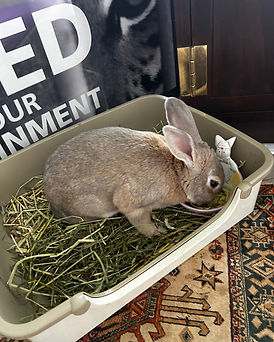
A litter-training method that uses rabbits' natural instincts
Rabbits have a natural habit of eliminating while they eat. By placing hay inside the litter box (or in a hay feeder mounted on top of it), you can take advantage of this instinct—rabbits will naturally spend more time in the box, making it easier for them to learn where to go.
Key points:
-
Choose a litter box large enough for your rabbit's body (with room to turn around comfortably)
-
Place the hay in a corner of the box, or in a dedicated hay feeder
-
Replace the hay promptly once it gets soiled
-
By building the association "hay = something to eat inside the litter box," you can reduce eating and accidents outside the box
This method works even for rabbits already living freely within a pen or enclosure.
Limit their range of movement with circles or fences to establish a designated "place."
If you suddenly let your rabbit roam freely in a large room, it will be confused about where the toilet is. Start by "limiting its space."
Initially, limit the rabbit's range of movement by using a rabbit enclosure or connecting panels. First, get the rabbit used to using the litter box reliably within that small area. This is the same step as when a human child learns the rules in their own room. Once the rabbit is able to use the litter box in the same place every day, gradually expand the panels until it is allowed to use the entire room.
If your rabbit "forgets" to use the litter box in a large open area, gently guide them back into their enclosure or enclosure and watch over them patiently until they regain their habit. With patience and a step-by-step approach, your rabbit will surely learn.
Why spaying/neutering rabbits makes toilet training easier.
Toilet habits before spaying/neutering
When they reach sexual maturity (around 4-6 months old), unneutered males in particular may exhibit the following behaviors:
Spraying behavior (urinating in the surrounding area) to mark territory.
"Marking" involves placing feces in various locations within the breeding area.
The dog doesn't have a designated toilet area, and potty training isn't progressing.
Female dogs can exhibit similar behavior during their mating season.
Changes after spaying/neutering
After about 2 to 8 weeks following surgery, once the hormonal effects have subsided, many rabbits will show the following changes:
Spraying behavior decreases or disappears.
The habit of defecating and urinating in a specific place becomes stronger.
The success rate of using toilet containers increases.
This is because, with the reduced need for marking, the rabbit's natural instinct to "defecate in a designated place" comes to the forefront.
Tips for toilet training (after spaying/neutering)
Place the litter box in the area where the rabbit likes to defecate.
Place hay near the toilet container (taking advantage of their habit of eating and defecating at the same time).
Install multiple litter boxes within the breeding area and gradually reduce their number.
Transfer the feces and urine from the area where the accident occurred to a new litter box and use the scent to guide the dog away.
Rabbit toilet training - Frequently asked questions
How many months does it take for a rabbit to learn to use the litter box?
While there are individual differences, rabbits that have been spayed or neutered usually learn to use the litter box within a few weeks to a month. Unspayed or neutered rabbits tend to exhibit strong marking behavior, which can make training take longer and may result in difficulty establishing a litter box. The basic first step is to separate the living space and place the litter box in a location that is easily accessible for the rabbit to relieve itself.
Which is better for a rabbit's litter box: litter or a liner?
For rabbit litter boxes, wood pellets (unscented) are suitable. They have excellent odor-eliminating properties and are highly safe even if ingested, so they are recommended by the HRS (Horse Rabbit Society).
We do not recommend using toilet sheets, which are widely used in Japan, as rabbits may chew on and eat them. Also, avoid using scented litter or cat litter, as these may irritate a rabbit's delicate respiratory system.
Points to consider when choosing:
Fragrance-free
Made of wood or paper
Combine it with a litter box large enough for the rabbit to fit its whole body inside.

Why do rabbits defecate when they are taken out of their cage?
This is not abnormal and is a common behavior in many rabbits. They may mark their territory outside their enclosure (at the boundary of their territory) due to territorial instincts. This is especially common in unspayed/unneutered rabbits, and in most cases, it improves significantly after surgery. If it doesn't improve, consider reviewing the location and number of litter boxes.
Should I clean my rabbit's litter box every day?
Yes, we recommend cleaning the litter box daily. Rabbits are clean animals and may defecate elsewhere if their litter box is dirty. Removing urine and hay scraps daily and thoroughly washing the entire litter box about once a week will help reduce odor and solidify their training.